



SHOPPING CART
Your cart is empty.
shop now
Your cart is empty.
shop now
Running DTA tests with the wrong sample container can lead to errors, contamination, and wasted research time. Reliable results depend on making the right choice for containers from the start.
Sample containers for Differential Thermal Analysis (DTA) hold specimens during tests, protect them from the environment, and must resist high heat without contaminating or changing the sample. Their properties are critical for accurate research outcomes.
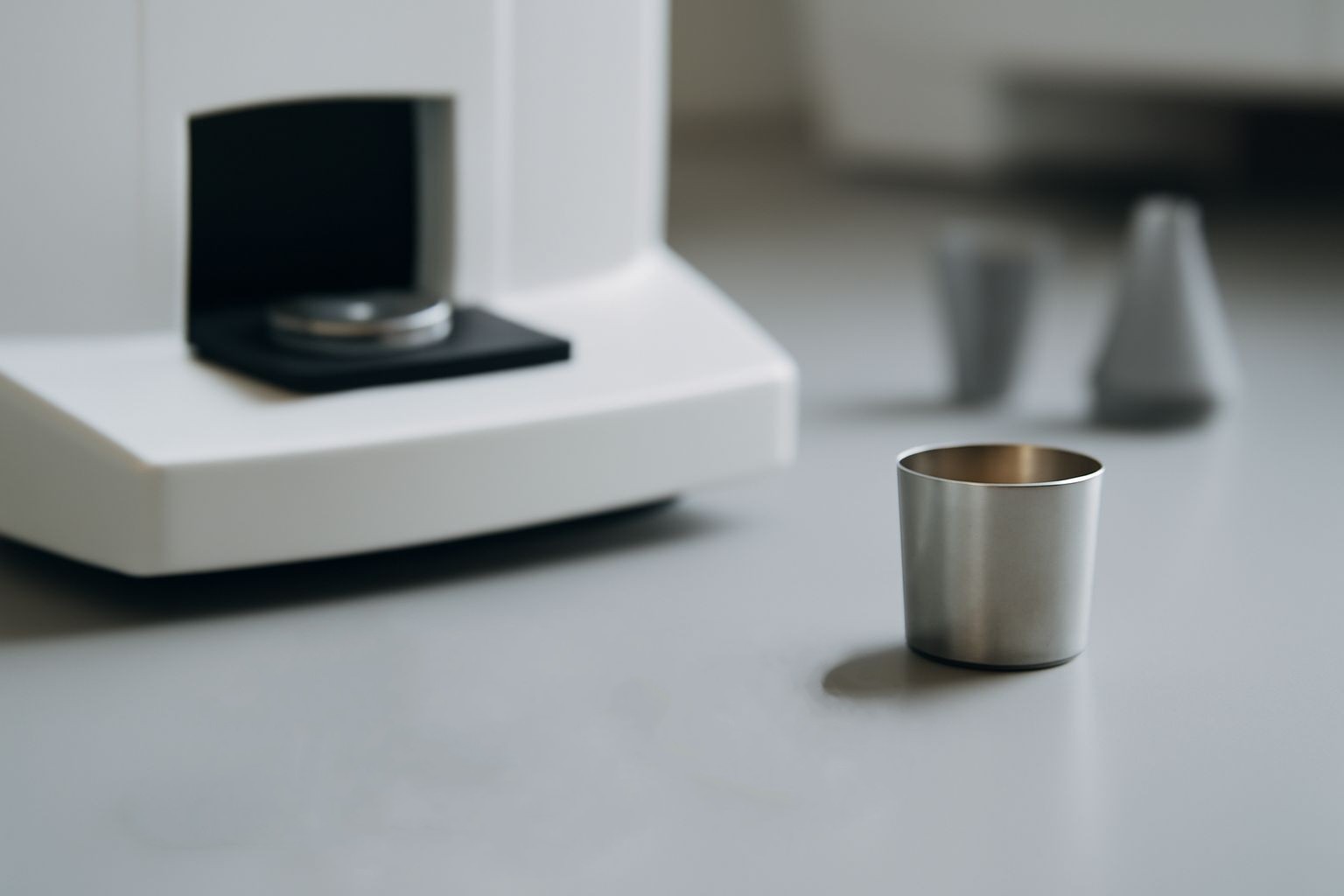
I have found that the right sample container can help researchers achieve precise, repeatable data no matter the type of material being studied, which gives real insight into reaction and transformation temperatures.
If the sample container reacts, melts, or changes shape during a DTA, it can ruin the whole experiment. The sample’s safety and the instrument’s reliability depend on the stability of the container.
Sample containers are important in DTA because they create a controlled micro-environment for each experiment. They shield samples from direct furnace contact, ensure even heating, and block contamination, which results in trustable and comparable data (differential thermal analysis).
| Container Function | Main Benefit | Consequences if Absent | Research Example |
|---|---|---|---|
| Heat resistance | No melting or warping | Sample loss | Polymer transitions |
| Chemical inertness | No sample reaction | Contaminated output | Battery material analysis |
| Gas barrier | Minimum oxidation | Altered peak shape | Oxidative stability study |
| Uniform shape | Even heating rate | Irregular signal | Melting point detection |
The choice of material has a direct impact on test quality, safety, and repeatability. Some materials can handle very high temperatures, while others are better for chemical purity or special sample types.
In DTA, aluminum, platinum, and ceramics are the top choices. Aluminum is affordable and works for many organics. Platinum gives top-level purity and heat resistance. Ceramics suit tests with high corrosion or unusual chemicals (platinum).
| Container Material | Max Temp (°C) | Main Benefit | Sample Type | Relative Cost |
|---|---|---|---|---|
| Aluminum | 630 | Good conductivity, low price | Polymers, food | Low |
| Platinum | 1600 | No contamination, high stability | Pharma, electronics | High |
| Ceramic | 1750 | Corrosive, stubborn samples | Battery, aggressive chemicals | Medium |
Accuracy in DTA relies on keeping background signals low and sample interaction honest. Even minor contamination or poor heat flow can change the whole interpretation.
Sample containers affect DTA accuracy by changing heat transfer and possibly releasing impurities. Clean, uniform, and inert containers ensure heat travels evenly and no interference occurs, keeping the test focused on the sample's real transitions (accuracy).
| Container Issue | Accuracy Effect | How to Avoid | DTA Signal Example |
|---|---|---|---|
| Dirt or residue | False peaks, drifting baseline | Clean before use | Suppressed endotherm |
| Wrong material | Unexpected peaks | Check compatibility | Metal-catalyzed artifacts |
| Poor fit | Uneven heating | Right size container | Split/shifted melting |
| Surface reactivity | Contamination | Use inert/pure pans | Drifting transition temp |
Thermal analysis research covers varied samples and testing needs, so many types of sample containers exist to match specific experiments and instruments.
Open pans, sealed pans, vented lids, crucibles, and custom machined holders are all used in research. Choice depends on test goals: isolated heating, measurement of volatiles, or tests of reactivity and stability (thermal analysis).
| Container Type | Design Feature | Test Application | Sample Type |
|---|---|---|---|
| Open pan | No lid | General DTA, TGA | Stable solids |
| Sealed pan | Hermetic seal | Volatile, wet samples | Food, pharma |
| Vented lid pan | Small vent hole | Pressure management | Degrading organics |
| Standard crucible | Deep-well, open/closed | High-temp, aggressive | Oxidizing chemicals |
| Custom holder | Made to order | Special geometry setups | Irregular test items |


C082.Wangdefu International Building, Furong, Changsha, Hunan, China


+86-19907415020