



SHOPPING CART
Your cart is empty.
shop now
Your cart is empty.
shop now
Getting accurate data in thermal analysis can be difficult. Using the wrong DSC sample pans leads to poor results, wasted materials, and repeated work.
DSC sample pans hold test materials during differential scanning calorimetry. They help deliver precise heat flow measurements for research in material science, pharmaceuticals, and industry labs.
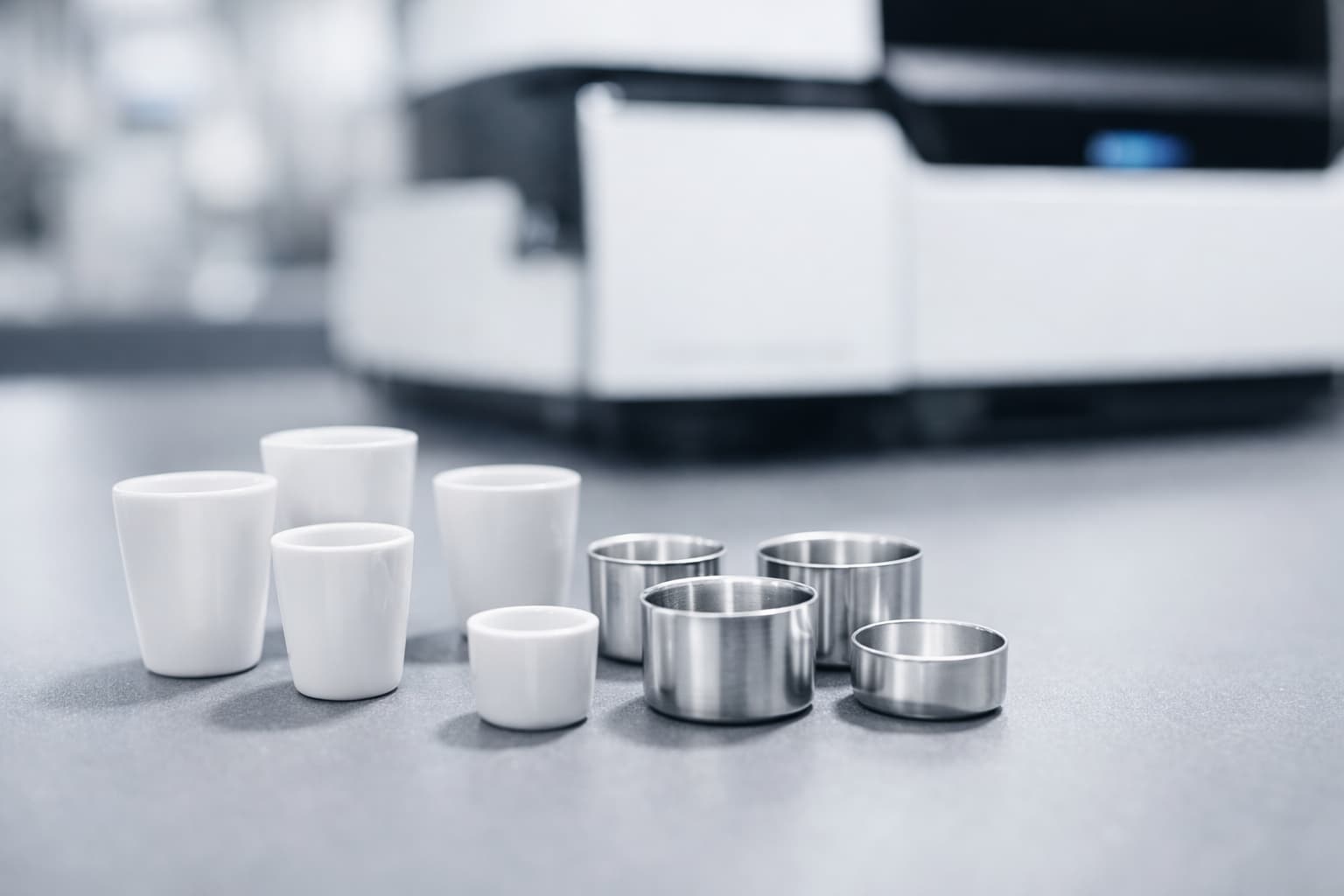
In my lab, I saw how the smallest details, such as choosing pan material and shape, decide how well a DSC test goes. Picking the right pan boosts my test quality and confidence. Next, I break down where and how DSC pans matter in real experiments and product development.
Researchers depend on proper DSC pans to secure their samples and achieve repeatable, reliable heat flow data for complex experiments.
DSC sample pans work as containers that isolate sample and reference materials. This isolation allows the DSC sensor to detect small changes in heat flow, giving exact measurements.
| Research Area | How Pans Are Used | Key Measurement | Material Type | Reference |
|---|---|---|---|---|
| Polymers | Testing melting and crystallization points | Melting temperature (Tm) | Aluminum pan | Polymer characterization |
| Pharmaceuticals | Examining purity and stability | Enthalpy change | Hermetic pan | Pharmaceutical applications |
| Composites | Measuring curing behavior | Glass transition (Tg) | Platinum pan | Composite materials |
| Metals | Tracking phase changes | Phase transition | Gold or ceramic pan | Calorimetry |
My experience tells me that using a poorly fitted pan leads to sample movement or contamination, both of which harm results. Matching pan design with research goals supports consistent test runs. Without this, meeting scientific standards is hard, no matter how modern the DSC instrument is (data source).
Small mistakes in pan choice or preparation can lead to major drops in data accuracy. The pan is the first part the sample contacts.
Choosing compatible pans and clean surfaces keeps baseline noise low. Matching pan material with sample chemistry stops unwanted reactions and protects sensitive readings.
| Parameter | Effect on Accuracy | Solution | Why It Matters | More Info |
|---|---|---|---|---|
| Material compatibility | Prevents unwanted reactions | Choose inert pan | Keeps signals true | Materials science |
| Seal integrity | Stops heat loss/gain | Confirm pan sealing | Makes transitions sharp | Sealing |
| Surface cleanliness | Reduces noise | Clean or single-use pans | Improves detail | Contamination control |
| Tight contact with sensor | Boosts measurement sensitivity | Use manufacturer-compatible pans | Maximizes response | Sensor |
I noticed one time that a reused pan with surface residue made baseline drift unpredictable. Since then, I always choose single-use or fully cleaned containers. Even though the DSC machine is advanced, poor pan prep limits accuracy. This fact is widely recognized in peer-reviewed studies.
Different industries rely on DSC pans to reveal properties that lead to safer, higher quality products and better research outcomes.
Materials science, pharmaceuticals, polymers, electronics, and food analysis are top fields that use DSC pans for quality control and development.
| Industry | Main Benefit | Common Measurement | DSC Pan Used | Key Application |
|---|---|---|---|---|
| Materials Science | Pinpoint phase change | Heat capacity | Aluminum | Phase transitions |
| Pharmaceutical | Sustain product purity | Glass transition | Hermetic | Drug stability |
| Polymer | Predict material performance | Crystallization point | Aluminum, PTFE | Polymer QA |
| Electronics | Prevent device failure | Thermal stability | Aluminum, ceramic | Electronic components |
| Food Science | Track quality changes | Fat melting range | Sealed, PTFE | Fat analysis |
I have helped labs from almost every sector adopt the correct DSC pans for their needs. Pharmaceutical teams focus on hermetic pans to block evaporation. Electronic firms pick high-stability pans for device reliability. This wide adoption matches industry-specific guidance as summarized in scientific reviews.
Reliability and easy sourcing often steer labs toward certain branded DSC pans, especially when matches with original instruments are required.
Industrial labs favor brands that guarantee compatibility with TA INSTRUMENTS, PERKINELMER, NETZSCH, and . High-quality third-party brands such as REDTHERMO also gain trust through consistent quality.
| Brand | Compatibility | Delivery Speed | Cost Level | Main Strength |
|---|---|---|---|---|
| TA INSTRUMENTS OE | TA INSTRUMENTS | Medium | High | Factory guarantees |
| PERKINELMER OE | PERKINELMER | Medium | High | Original performance |
| NETZSCH OE | NETZSCH | Medium | High | Direct support |
| OE | Medium | High | Lab reference | |
| REDTHERMO | All main brands | Fast | Low/Medium | Flexible, high value |
Some labs stick to original equipment brands for simplicity in paperwork and certification. Others move to trusted high-quality third-party brands, especially for custom or bulk orders. REDTHERMO offers a real choice by allowing custom orders and small packs. I use REDTHERMO pans often for both tests and customer evaluations because I trust the quality and delivery speed. It helps keep projects on time and within budget while offering proven compatibility with most mainstream DSC devices (reference).


C082.Wangdefu International Building, Furong, Changsha, Hunan, China


+86-19907415020