



SHOPPING CART
Your cart is empty.
shop now
Your cart is empty.
shop now
Many labs struggle to select the right accessory for each test, risking incorrect results and wasted samples. Picking the wrong pan or crucible can slow your work and increase costs.
To choose the best thermal analysis accessory, match the material and design to your lab’s specific application, considering sample type, temperature range, and instrument compatibility. Work only with trusted suppliers to ensure test accuracy.
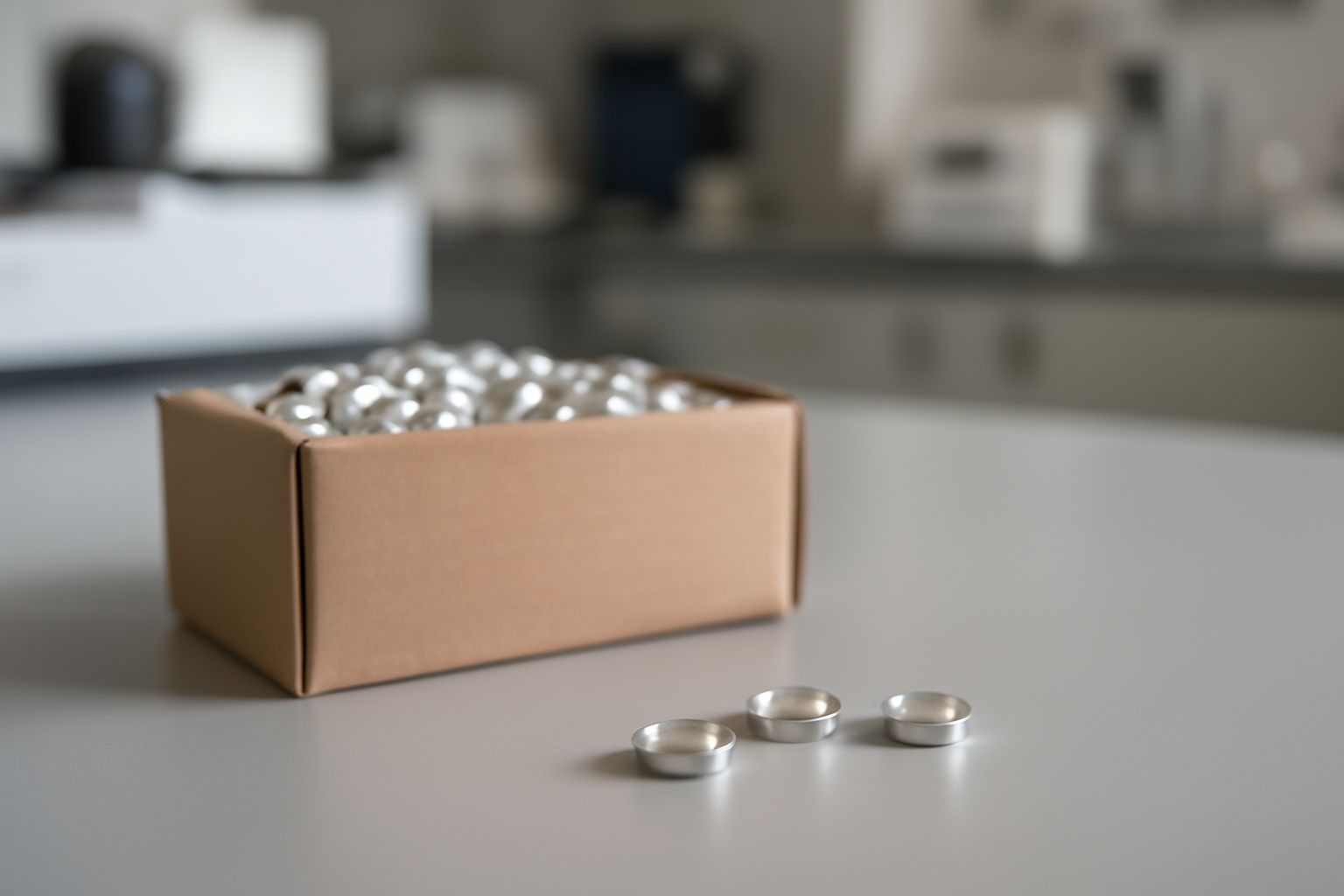
Labs have many options, but understanding your test’s purpose is the first step toward reliable results. With so many choices, it is important to know which accessories fit your needs best, so let’s look at how to match accessories to real-world lab applications.
Pharmaceutical labs must avoid sample loss and product instability. Wrong accessories lead to evaporation or contamination, forcing you to redo tests and lose time.
For pharmaceutical testing, choose sealed crucibles for volatile samples and pans made from inert materials. Always confirm your accessory fits your instrument model to protect sensitive pharmaceutical compounds.
| Accessory Type | Best Use | Material | When to Select |
|---|---|---|---|
| Sealed Crucibles | Volatile and moisture-sensitive samples | Aluminum, Silver, Gold | Analyze samples that can evaporate before test ends |
| Standard Sample Pans | Routine DSC, TGA analysis | 99.99% High Purity Aluminum | Most pharmaceutical powder and solid forms |
| High-Pressure Pans | Pressurized or sealed conditions | Gold-Plated or Stainless Steel | Samples releasing gas under heat |
Sealed crucibles are essential for testing samples that might evaporate, such as solvents or active pharmaceutical ingredients. I have known projects fail when using open pans for these cases. Selecting the right accessory not only protects results but also the time and resources invested in pharmaceutical research. To learn more about differential scanning calorimetry in pharmaceuticals, check further studies online.
In materials science, accessory errors harm research by giving inaccurate thermal data. Poor choices mean inaccurate melting points or missed transitions, which can lead to material waste and lost time.
For materials science, use high-purity aluminum or platinum sample pans, based on the maximum temperature and sample type. Make sure accessory tolerance matches your instrument’s holder for reliable thermal analysis.
| Accessory | Material | Temperature Range (°C) | Application |
|---|---|---|---|
| High Purity Aluminum Pan | Aluminum (99.99%) | -80 to 600 | Melting point, glass transition, polymer studies |
| Platinum Crucible | Platinum | -80 to 1600 | Oxide materials, ceramics, high-temp samples |
| Vent Hole Pan | Aluminum | -80 to 600 | Studies that produce small amounts of gas |
In my experience, compatibility with both temperature and chemical reactivity is important for success in materials testing. Platinum crucibles cost more, but they work best for samples that require heating above 1000°C or that react with aluminum. A high-purity aluminum pan is the top choice for common plastics or composites. For more details, visit materials databases like MatWeb for matching your sample with an accessory.
Semiconductor testing can fail if accessory surfaces cause contamination or do not allow for precise heat transfer. This lowers chip reliability, which is a huge problem for QC.
Select sample pans made from ultra-clean materials, such as platinum or high-purity alumina, to avoid contamination and support high accuracy in heat flow measurement in semiconductor testing.
| Accessory | Material | Advantage | Use Case |
|---|---|---|---|
| Alumina Pan | Alumina | High purity, chemical resistance | Chip substrates, high-temp preprocess |
| Platinum Pan | Platinum | No contamination, wide temp range | Doping control, advanced chip material |
| Standard Aluminum Pan | Aluminum | Economical, non-reactive | Routine chip packaging material tests |
I have seen how trace contamination from standard pans caused failed quality checks for semiconductor wafers. Ultra-clean alumina or platinum pans reduce this risk during thermoanalysis of small and sensitive samples. Choosing accessories with smooth, clean surfaces and reliable tolerance builds long-term trust in chip manufacturing labs.
Selecting the wrong accessory for high-temperature work risks sample loss, pan deformation, or test equipment damage. This leads to wasted costly materials and delays in R&D projects.
For high-temperature analysis, always use pans and crucibles made from platinum or high-grade ceramics that maintain shape and purity above 1000°C; check compatibility with your thermal analyzer.
| Accessory | Material | Max Temp (°C) | Notes |
|---|---|---|---|
| Platinum Crucible | Platinum | 1600 | Ideal for ceramic, oxide, or glass analysis |
| Silicon Carbide Pan | SiC | 1500 | Great thermal shock resistance |
| Alumina Crucible | Alumina | 1500 | Good for corrosion resistance |
| Gold Crucible | Gold | 1100 | Special cases: highly reactive chemicals |
I learned that high-temperature thermal analysis demands accessories that do not deform or react with your sample at maximum temperature. Even slight pan warping causes leaks and can ruin long tests. The investment in platinum or SiC is justified as it protects valuable samples and instruments. It’s always a good idea to check supplier test data for maximum pan temperature limits before ordering.
Choosing the right thermal analysis accessory depends on your application, material compatibility, and temperature need. Proper selection secures accurate, repeatable lab results.
Contact Our Technical Support →
Have questions? Email: info@redthermo.com


C082.Wangdefu International Building, Furong, Changsha, Hunan, China


+86-19907415020